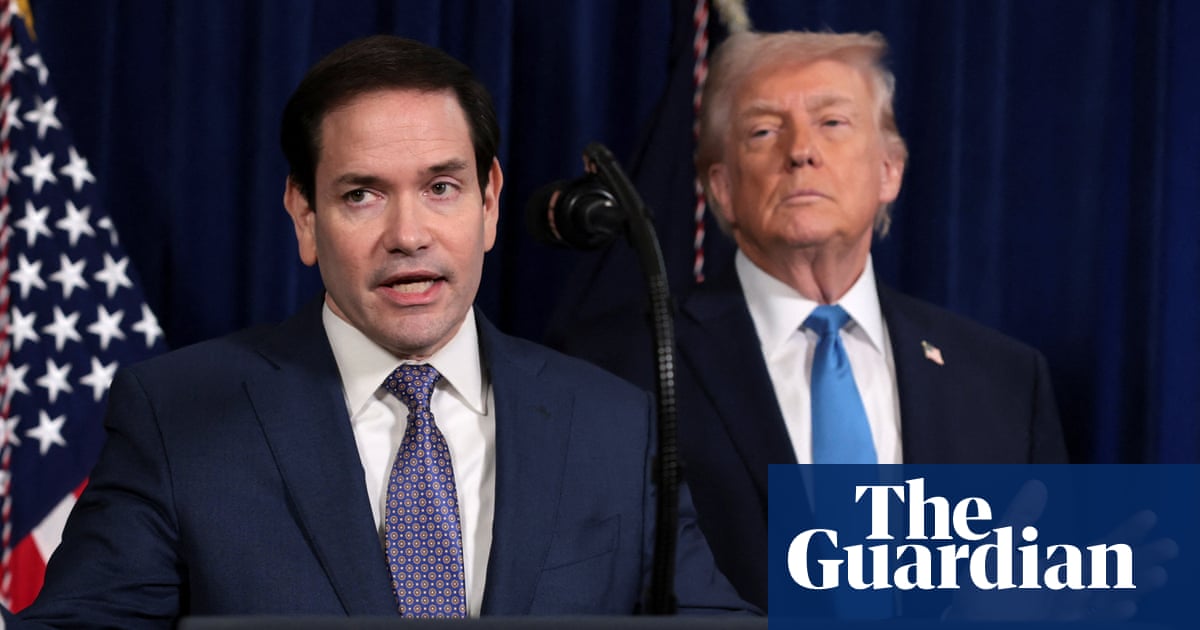
Rubio Defends Iran Strikes: Preemptive Action Averted US Casualties
In a period of heightened geopolitical tension, the rationale behind significant military actions often comes under intense scrutiny. Few instances exemplify this more clearly than the Trump administration's decision to launch strikes against Iran, a move staunchly defended by then-Secretary of State Marco Rubio. Rubio's central argument posited these operations as a necessary preemptive measure, designed not to provoke, but to prevent a potentially devastating chain of events that could have led to substantial American casualties. His explanations sought to provide clarity amidst an outpouring of criticism, particularly from Democratic lawmakers, regarding the legality, necessity, and transparency of the military engagement.
The core of Rubio's defense for the Rubio US Iran strikes hinged on a specific interpretation of intelligence, suggesting an "imminent threat" that demanded swift and decisive action. This perspective was presented as a critical factor in understanding why the administration chose to act pre-emptively rather than absorb a blow. This article delves into Rubio's justification, the political fallout, and the broader implications of these controversial strikes, offering a comprehensive look at a defining moment in US foreign policy.
The Preemptive Calculus: Averting a Foreseen Retaliation
Rubio articulated a complex, yet clear, sequence of anticipated events that he argued necessitated the U.S. strikes. According to his explanation, intelligence indicated an almost certain scenario: an expected Israeli military action against Iran would inevitably provoke Iranian retaliation, and crucially, this retaliation would be directed against American forces in the region. "We knew that there was going to be an Israeli action. We knew that that would precipitate an attack against American forces, and we knew that if we didn't preemptively go after them, before they launched those attacks, we would suffer higher casualties," Rubio stated. This "knowledge," he asserted, left the administration with a stark choice: act preventatively or face the consequences of inaction, potentially answering questions about why known threats were not addressed.
This perspective underlines a fundamental shift in military strategy, moving beyond reactive measures to a proactive stance based on intelligence assessments of future threats. The concept of an "imminent threat" here extends beyond immediate, observable preparations for an attack, encompassing a broader predictive analysis of regional dynamics. For Rubio, the intelligence was "abundantly clear" that if Iran came under attack from Israel, it would undoubtedly retaliate against the United States, making the U.S. operations a crucial interceptive maneuver. The stated objective was not just to punish, but specifically "to eliminate the threat of Iran's short-range ballistic missiles" and the menace posed by its naval capabilities, portraying the mission as narrowly focused on mitigating specific, identifiable threats rather than an open-ended engagement.
Understanding what constitutes an "imminent threat" is often a point of contention in international law and national security debates. Traditionally, "imminent" implies an attack is about to happen, leaving no time for deliberation. Rubio's expanded definition suggests that an anticipated chain reaction, even if not immediately manifesting, can still qualify as an imminent threat if the consequences for national interests, particularly the safety of personnel, are severe and highly probable. This interpretation allows for a broader scope of preemptive action, raising questions about the threshold for military intervention and the reliability of intelligence in predicting future events with such certainty. It requires robust intelligence gathering and analytical capabilities, but also a willingness to act on those assessments under significant international and domestic pressure.
Congressional Scrutiny and Public Disapproval
Despite Rubio's confident defense, the administration's actions faced considerable pushback from Congress, particularly from Democrats. Critics argued that the administration had not fulfilled its legal obligation to notify Congress of its plans for military action, sparking a significant debate over executive authority in matters of war. Democratic lawmakers, including Senator Andy Kim, an Obama-era director for Iraq on the White House National Security Council, vocally advocated for congressional votes on resolutions that would explicitly block the President's ability to conduct further strikes on Iran without explicit congressional approval.
"The American people have already made up their mind, which is they do not want United States in a war in the Middle East," Kim stated, reflecting a broader sentiment among a significant portion of the populace. Indeed, a Reuters/Ipsos survey conducted around the time of the strikes revealed compelling public opinion: only 27% of Americans approved of the strikes, while 43% disapproved, and 29% remained undecided. This stark contrast between the administration's resolve and public sentiment highlighted a growing fatigue with prolonged military engagements in the Middle East.
The debate extended beyond notification, with Democrats demanding a clear strategy for any potential conflict and seeking clarification on what they viewed as contradictory information regarding Iran's nuclear capabilities and its ballistic missile program. This push for transparency and strategic clarity underscored a fundamental tension between executive prerogative in national security and legislative oversight. The historical context of the War Powers Resolution, enacted to limit presidential power to commit the U.S. to armed conflict without congressional approval, looms large in such discussions. This moment underscored the perpetual struggle between the branches of government over the initiation of hostilities, and the urgent need for a cohesive national security strategy that garners bipartisan support and public trust. For more on this, consider reading Rubio's Iran War Rationale Faces Congressional, Public Backlash.
Geopolitical Ramifications and Future Strategy
Rubio also framed the strikes within a larger geopolitical context, asserting that the operation was not merely reactive but strategic. "No matter what, ultimately this operation needed to happen," he contended, pointing to Iran's ongoing regional influence. "Look at the damage they're doing now, and this is a weakened Iran, imagine a year from now." This statement suggested a longer-term vision, implying that the strikes were also aimed at degrading Iran's capabilities and preventing it from becoming an even greater threat in the future.
The actions against Iran, therefore, were presented as part of a broader strategy to contain and weaken an adversary repeatedly accused of attempting to restart its nuclear program and destabilize the region. However, such preemptive actions carry inherent risks, including the potential for unintended escalation. While the immediate goal was to avert U.S. casualties, the long-term impact on regional stability, international relations, and Iran's own strategic calculations remains a subject of ongoing analysis. Military actions, even those justified as defensive or preemptive, rarely occur in a vacuum; they trigger responses, reshape alliances, and influence the calculus of numerous state and non-state actors.
For policymakers, a key takeaway from this episode is the critical importance of a multi-faceted approach to national security. While military strength is a vital component, diplomatic engagement, robust intelligence sharing, and transparent communication with both domestic and international audiences are equally crucial. Crafting a sustainable strategy requires not only understanding the immediate threat but also anticipating the complex ripple effects of any intervention, ensuring that short-term gains do not inadvertently lead to long-term instability or unintended conflicts. It also underscores the importance of clear, consistent messaging to manage expectations and build consensus, both domestically and internationally, when contemplating actions with such profound implications.
Conclusion
Marco Rubio's defense of the Iran strikes offered a powerful articulation of a preemptive strategy aimed at safeguarding American lives and interests in a volatile region. His argument, rooted in intelligence suggesting an imminent threat and a foreseeable chain of retaliatory events, highlighted the difficult choices faced by national security leaders. While the administration maintained it fulfilled its obligations, the strikes ignited a fierce debate in Congress and among the public, underscoring deep divisions over executive war powers and the efficacy of military intervention in the Middle East. The controversy surrounding these Rubio US Iran strikes serves as a crucial case study in the complexities of modern foreign policy, where intelligence assessments, political will, public opinion, and legal frameworks constantly intersect, shaping the nation's path on the global stage.